- News and Stories
- Blog post
- Summit
Get Excited about Summit 2026
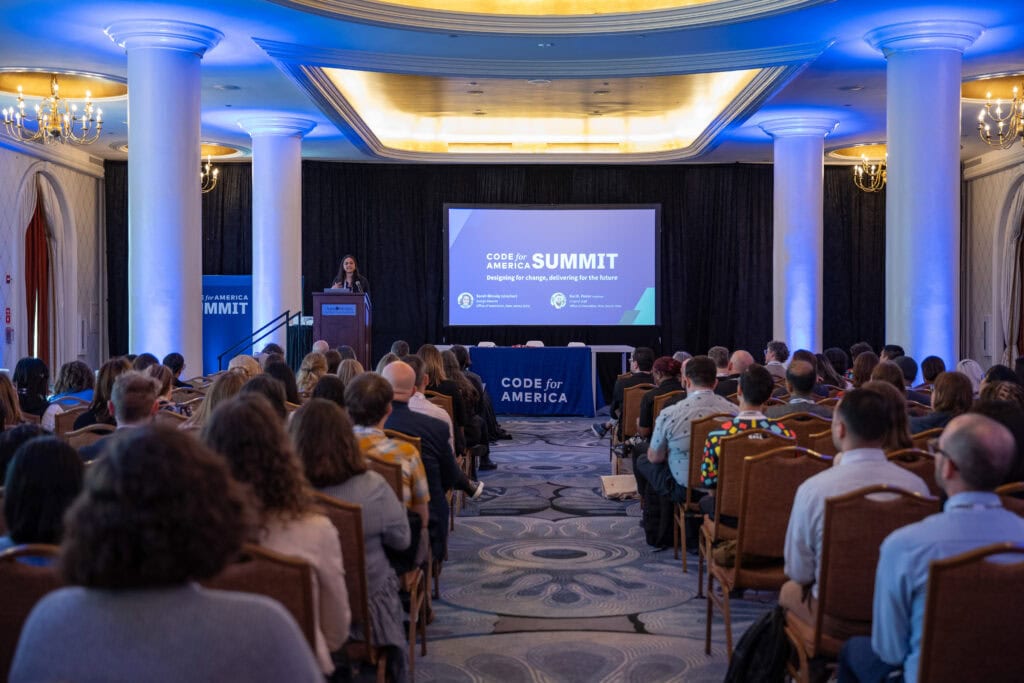
Every year, Code for America Summit brings together people who believe government can—and should—work better for everyone. This year, the conversations will be more impactful than ever. For Summit 2026, happening May 7–8 in Chicago, we’re leaning into what this moment calls for: practical solutions, honest conversations, and a shared commitment to building a more responsive, resilient government.
The tracks for this year’s Summit reflect that focus. They’re grounded in the real work happening across the country—and designed to help you connect that work to your own. Whether you’re deep in implementation or just starting to explore civic tech, there’s a place for you here.
Emerging Technology + Innovation
New technologies are reshaping what’s possible in government, and this track explores all the dimensions of government impacted by AI. Sessions will highlight how teams are experimenting with emerging tools while staying grounded in ethics and real-world impact. As seen in recent Summits, this includes practical applications of AI and digital transformation in government workflows. Here are a few sessions in this track we’re excited about:
- How to Design Impact Evaluations for Government AI Tools: Drawing from three GenAI pilots, including an assistive chatbot, agentic form-filling assistant, and referral generator, attendees will learn how to design data-driven evaluation studies, from randomized experiments with phased rollouts to mixed-methods approaches.
- Evaluating When to (Not) Use LLMs to Deliver Multilingual Services: The Minnesota Department of Human Services will share when, how and why they use large language models (LLMs) as part of their multifaceted translation strategy to design experiences across four languages for a SaaS licensing tool.
Service Design + Delivery
If policy sets the vision, service delivery is where people actually experience government. This track focuses on the end-to-end journey: how services are designed, built, and delivered in ways that are accessible, effective, and grounded in real human needs. It’s about moving beyond intent and making sure systems actually work in practice. Expect sessions that dig into usability, accessibility, design systems, and the operational realities of delivering better services at scale. This track knows that getting implementation right isn’t just technical—it’s fundamental to building trust. Here are a few sessions in this track we’re excited about:
- Designing a Better Path through SNAP and Medicaid Work Requirements: A team from Code for America will outline their service blueprint work for a work requirements exemption tool, sharing new, user-tested designs for asking sensitive screening questions that meet the needs of clients and workers.
- How NYC’s Benefits Screener Became Shared Infrastructure: This session brings together the team behind the NYC Screening API and two implementation partners to discuss technical architecture, key integration decisions, and what early engagement data has revealed.
Policy + Administration
Policy and technology are often treated as separate worlds—but in practice, they’re deeply intertwined. This track is about closing the gap between policy intent and real-world outcomes. It explores how decisions get made, how systems get implemented, and how we can better align the two. From procurement and program design to cross-agency collaboration, these sessions focus on the “how” behind effective government, bringing clarity to the processes that shape people’s lives. Here are a few sessions in this track we’re excited about:
- What Works? State Leaders on Income Verification Strategies: Join a candid conversation with state leaders from Pennsylvania and Arizona on how their income verification strategies have changed to navigate H.R. 1 requirements, touching on implementation strategy, timelines, accuracy vs. privacy, user experience, and cost.
- What It Takes to Win on Government Tech in Congress: Four TechCongress alumni will share what it actually takes to get wins in Congress on modernizing SNAP, fixing Unemployment Insurance, and improving how government builds tech.
People Power + Community
At the heart of civic tech is a simple idea: the best solutions come from people. This track centers the organizers, advocates, public servants, and community members who are driving change from the ground up. It’s about participation, collaboration, and the relationships that make lasting impact possible. Sessions will explore how to build and sustain communities, expand access to programs and services, and create pathways for more people to engage in civic life. Here are a few sessions in this track we’re excited about:
- Unprecedented Tribal Collaboration to Bridge the Summer EBT Gap: This session goes under the hood of how Tribal Nations, Hunger Free Oklahoma, and social enterprise Asemio integrated data from 40+ school districts, navigated privacy and intergovernmental agreements, and designed outreach to help serve 85%+ of eligible children.
- Three Government Attorneys Walk Into a Bar… And Enable Innovation: Attorneys from New Jersey, the U.S. Digital Service, and Boston will share how to identify attorney allies, set them up for success, and get legal support—not just legal review—for innovative projects.
The Demo Lab
Back for its second year, the Demo Lab is where you can explore projects in process and speak directly with the people bringing them into being. It’s the place to talk through process, exchange ideas for designing programs and services, and help move the field forward. Here are a few demos we’re excited about:
- Building Open-Source Medicaid Compliance Together: A small group of advocates will walk through the recently built Open-Source Community Engagement Reporting (OSCER) app, an approach that lets any state implement a transparent, reusable “sidecar” for Medicaid work requirement determinations without waiting on black-box systems or vendor timelines.
- Pennsylvania’s Benefits Status Tracker and AI Document Screening: As part of a larger engagement to reduce SNAP payment error rates, Pennsylvania launched five simultaneous projects to improve benefits access and will demo two of them, TrackMyBenefits.pa.gov and an Intelligent Document Processing (IDP) pilot.
A program built for this moment
The program we’ve built this year reflects a growing, maturing field. A field that’s embracing emerging technologies, maintaining connection to our founding principles, and building better systems every day. You’ll find breakout sessions and Demo Lab presentations that get into the weeds, lightning talks and panels that inspire new approaches, and plenty of opportunities to connect with others doing the work alongside you—because, as we all know, Summit isn’t just about what’s happening on mainstage. It’s about the conversations in the hallway, the connections that spark new ideas, and the shared sense of purpose that carries beyond these two days.
Start thinking about where you want to dive in. We can’t wait to see you there.
Don’t have your ticket yet? There’s still time! Join us May 7-8 in Chicago. In the meantime, explore the agenda and start planning your Summit experience.